Schema.org Best Practices for AI Shopping Agents
Structured data is the #1 signal AI agents use to find and recommend products. Here's how to optimize your Schema.org markup for maximum visibility.
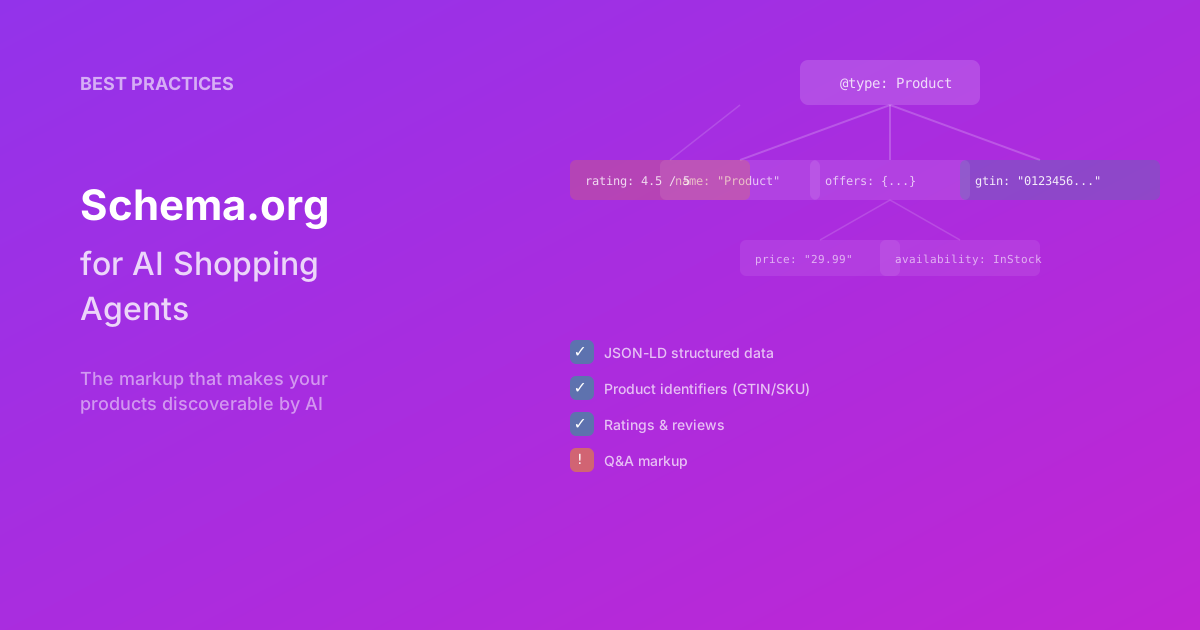
Of the three protocols we audit — UCP, ACP, and Schema.org — structured data consistently has the highest impact on AI agent visibility. Every major AI shopping agent (Google Gemini, ChatGPT, Perplexity) relies on Schema.org markup to understand what products you sell, what they cost, and whether they're available.
Yet most merchants leave significant value on the table. Here are the best practices that actually move the needle.
Why Schema.org Matters More Than Ever
Traditional SEO has always valued structured data, but AI agents take it to another level. When a user asks an AI agent "What's the best organic face cream under $40?", the agent needs to:
- Identify products that match the query
- Compare prices across retailers
- Check availability
- Evaluate quality signals (ratings, reviews)
- Make a recommendation
Schema.org markup provides machine-readable data for every step. Without it, AI agents are guessing based on page text — and they'll often guess wrong or skip your products entirely.
The Must-Have Markup
1. Product Type with Full Properties
Every product page should have a Product schema with complete properties:
<script type="application/ld+json">
{
  "@context": "https://schema.org",
  "@type": "Product",
  "name": "Classic Leather Sneaker — White, Men's",
  "description": "Handcrafted leather sneaker with cushioned insole...",
  "brand": {
    "@type": "Brand",
    "name": "Your Brand"
  },
  "gtin": "0123456789012",
  "sku": "CLW-001",
  "image": [
    "https://store.com/images/sneaker-front.jpg",
    "https://store.com/images/sneaker-side.jpg",
    "https://store.com/images/sneaker-back.jpg"
  ],
  "offers": {
    "@type": "Offer",
    "price": 89.00,
    "priceCurrency": "USD",
    "availability": "https://schema.org/InStock",
    "url": "https://store.com/products/classic-sneaker",
    "priceValidUntil": "2025-12-31",
    "seller": {
      "@type": "Organization",
      "name": "Your Store"
    }
  },
  "aggregateRating": {
    "@type": "AggregateRating",
    "ratingValue": 4.6,
    "reviewCount": 342
  }
}
</script>
2. Product Identifiers: GTIN, MPN, SKU
This is the most commonly missed field — and the highest impact. Product identifiers allow AI agents to:
- Deduplicate products across retailers
- Match products confidently to user queries
- Compare prices for the same product across stores
- Verify authenticity of product listings
Include gtin (UPC/EAN barcode), mpn (manufacturer part number), and sku where available. The GTIN is most important.
3. Aggregate Ratings and Reviews
AI agents treat ratings as a primary trust signal. Include aggregateRating with both ratingValue and reviewCount. Individual reviews with Review schema are even better but optional.
Common mistake: displaying star ratings visually on your page without including them in structured data. If it's not in the JSON-LD, AI agents can't see it.
4. Multiple High-Quality Images
The image property should be an array of URLs, not a single image. AI agents prefer products with multiple angles:
- Front view
- Side or angle view
- Detail/close-up shot
- Lifestyle/in-use photo
Use high-resolution images (at least 800x800px). Avoid watermarks or text overlays — they degrade AI image understanding.
5. Availability and Pricing
Keep your offers data current. Stale data (showing "in stock" when the product is sold out, or wrong prices) damages your credibility with AI agents over time. They learn to deprioritize unreliable sources.
Include priceValidUntil to signal how long the price is accurate.
Advanced Optimizations
Q&A Markup
Almost nobody implements this, but it's incredibly powerful for AI agents. If you have a FAQ or Q&A section on your product pages, mark it up:
{
  "@type": "FAQPage",
  "mainEntity": [
    {
      "@type": "Question",
      "name": "Is this shoe good for flat feet?",
      "acceptedAnswer": {
        "@type": "Answer",
        "text": "Yes, the cushioned insole provides excellent arch support..."
      }
    }
  ]
}
This directly maps to the long-tail conversational queries that AI shopping agents handle — "Is X good for Y?" questions.
Breadcrumb Markup
Breadcrumb structured data helps AI agents understand your product taxonomy:
{
  "@type": "BreadcrumbList",
  "itemListElement": [
    { "@type": "ListItem", "position": 1, "name": "Shoes", "item": "https://store.com/shoes" },
    { "@type": "ListItem", "position": 2, "name": "Sneakers", "item": "https://store.com/shoes/sneakers" },
    { "@type": "ListItem", "position": 3, "name": "Classic Leather Sneaker" }
  ]
}
Platform-Specific Tips
Shopify
Shopify includes basic Product schema by default, but it often misses GTINs, ratings, and multiple images. Use a structured data app like JSON-LD for SEO, or add custom Liquid code to your product template.
WooCommerce
WooCommerce has decent built-in schema, but many themes override it. Use a plugin like Rank Math or Yoast to ensure consistent, complete Product markup.
Custom Platforms
If you're on a custom platform, implement JSON-LD directly in your product page template. Avoid Microdata — JSON-LD is cleaner and easier to maintain.
Validation Checklist
Before you consider your Schema.org implementation complete, verify:
- Every product page has a
Productschema in JSON-LD format - GTIN or MPN is included for every product
aggregateRatingis present withratingValueandreviewCountimageis an array with 2+ URLsoffersincludesprice,priceCurrency, andavailability- All URLs are absolute (not relative)
- Prices are current and availability is accurate
Test your structured data with a free AgentCart scan — we validate every field against what AI agents actually look for.
Check your AI commerce readiness
Get your free score across Google UCP, ChatGPT Shopping, and Schema.org in under 30 seconds.
Run a free scan