How ChatGPT Shopping Works: What Merchants Need to Know
ChatGPT can now recommend and sell products directly in conversation. Here's how the system works and what your store needs to be included.
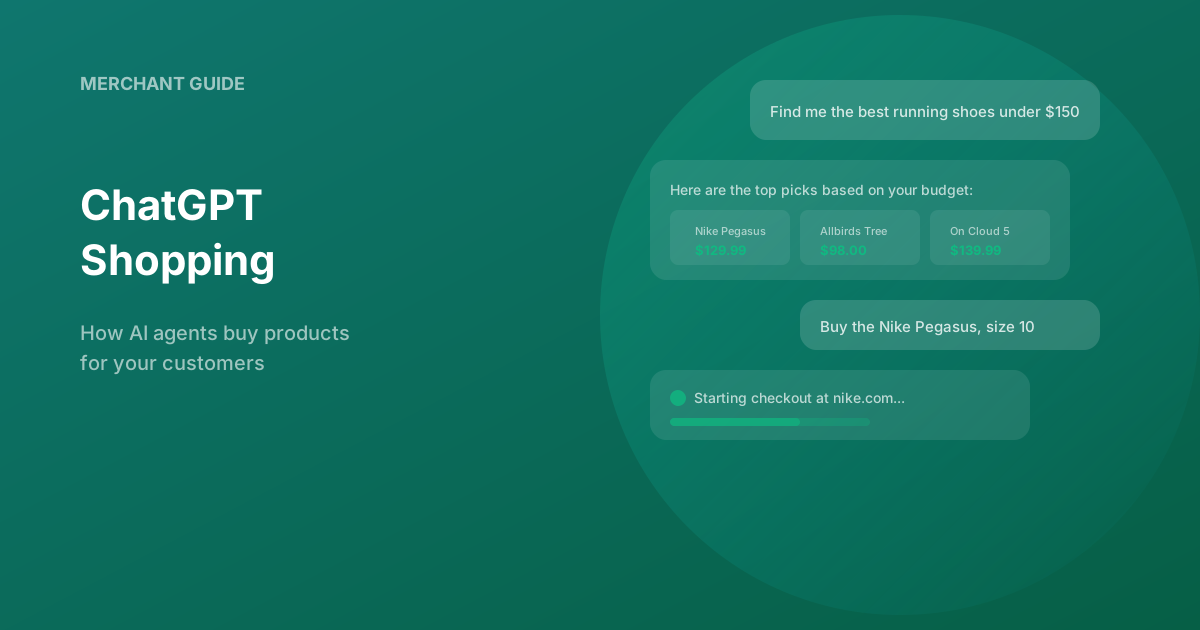
OpenAI has turned ChatGPT into a shopping assistant. Users can now ask ChatGPT to find products, compare options, and even initiate purchases — all within a conversation. For merchants, this represents a massive new distribution channel. But only if your products are actually discoverable.
How ChatGPT Shopping Works
When a user asks ChatGPT a shopping-related question — "What's the best moisturizer for dry skin?" or "Find me running shoes under $150" — the model draws from multiple data sources to generate product recommendations:
- Product feeds — OpenAI ingests product data through feed partnerships and direct integrations
- Web search — ChatGPT can browse the web and extract product information from your pages
- Structured data — Schema.org markup on your product pages provides clean, parseable product attributes
- ACP (Agent Commerce Protocol) — OpenAI's emerging protocol for direct merchant-to-agent communication
The key insight: ChatGPT doesn't just list products — it recommends them. It synthesizes information about price, ratings, features, and availability to make personalized suggestions. This means the quality and completeness of your product data directly impacts whether you get recommended.
What Makes Your Products Show Up
Our analysis of ChatGPT shopping responses across hundreds of queries reveals clear patterns in what gets recommended:
1. Product Identifiers (GTINs)
Products with GTINs (UPC/EAN barcodes) are matched with significantly higher confidence. Without a GTIN, ChatGPT may not be sure your "Blue Running Shoe" is the same product a user saw elsewhere. GTINs eliminate ambiguity.
2. Star Ratings and Review Counts
When comparing similar products, ChatGPT consistently favors products with higher ratings and more reviews. A product with 4.5 stars and 2,000 reviews will almost always be recommended over a similar product with no ratings data.
3. Complete Product Descriptions
ChatGPT understands natural language queries. If a user asks for "waterproof hiking boots for wide feet," your product description needs to mention waterproofing, hiking, and wide width options. Sparse descriptions mean missed matches.
4. Pricing and Availability
Products with clear, current pricing and "in stock" availability are preferred. ChatGPT avoids recommending products that might frustrate users with out-of-stock messages.
5. Multiple Product Images
When ChatGPT displays product recommendations, it includes images. Products with multiple high-quality images from different angles appear more trustworthy and get more click-throughs.
The ACP Feed Spec
OpenAI's Agent Commerce Protocol (ACP) defines the ideal product data format for AI shopping. While the full spec is still evolving, the core fields include:
{
  "title": "Product Name — Color, Size",
  "description": "Detailed product description...",
  "price": 129.99,
  "currency": "USD",
  "availability": "in_stock",
  "gtin": "0123456789012",
  "brand": "Brand Name",
  "rating": 4.5,
  "rating_count": 1247,
  "images": ["url1.jpg", "url2.jpg", "url3.jpg"],
  "categories": ["Shoes", "Running", "Men's"],
  "url": "https://store.com/product"
}
What AgentCart Checks
Our ACP readiness scan evaluates:
- Feed discoverability — Can ChatGPT find and parse your product data?
- Field completeness — Are required fields (title, price, GTIN, images) present?
- Data quality — Are descriptions detailed enough for natural language matching?
- Rating coverage — Do your products include star ratings and review counts?
- Image count — Do you have multiple product images?
- Product page count — How many products are indexed and discoverable?
Quick Wins for ChatGPT Visibility
- Add GTINs immediately — This is the single highest-impact change you can make
- Enable review aggregation — Make sure your ratings are in your structured data, not just rendered visually
- Write AI-friendly descriptions — Include the natural language terms customers use, not just marketing copy
- Ensure image variety — Include front, side, detail, and lifestyle shots
- Keep feeds current — Stale pricing or availability data hurts your recommendations
Find out how ChatGPT-ready your store is with a free AgentCart scan.
Check your AI commerce readiness
Get your free score across Google UCP, ChatGPT Shopping, and Schema.org in under 30 seconds.
Run a free scan